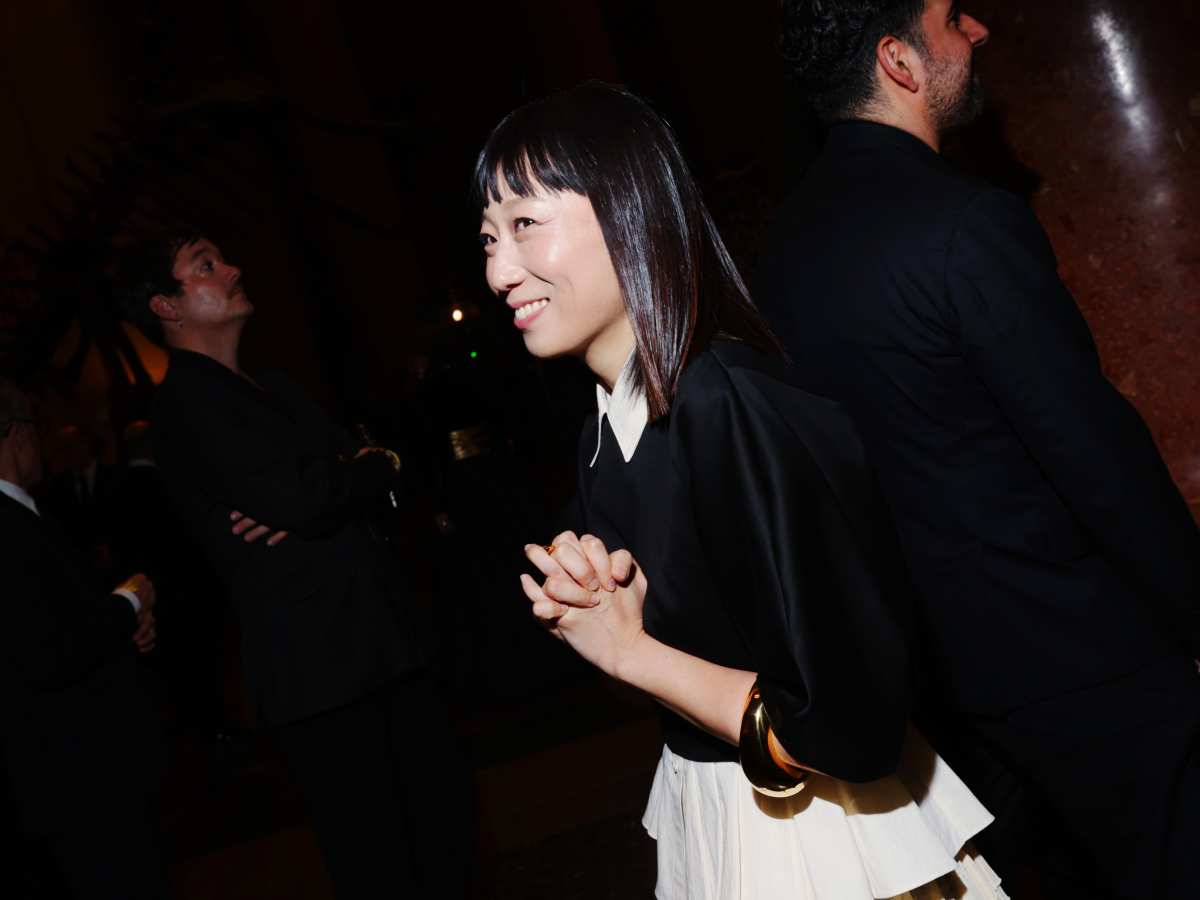
A major influence in contemporary fashion, Miuccia Prada is recognized for her intellectual designs, challenging aesthetics, and constant innovation. Leading both Prada and Miu Miu, her impact surpasses her own label, affecting all aspects of current style and fashion culture. To grasp her importance, one must examine her innovative methods, her effect on visual trends, and her role in transforming both the high-end and popular fashion industries.
Intellect and Fashion Come Together: The Prada Style
From the outset, Miuccia Prada distinguished herself by infusing fashion with intellectual rigor. Unlike many contemporaries, her academic background—a PhD in Political Science and training in mime at Piccolo Teatro—provided her with a unique standpoint. She often describes her creative process as one driven by curiosity, skepticism, and dualities: “Ugly chic,” the idea of making unattractive elements desirable, became a signature. For instance, the famed nylon backpack released in 1984 challenged conventions of luxury by transforming a utilitarian material into a coveted item. This move catalyzed a paradigm shift in how luxury brands viewed technical fabrics, stimulating new dialogues around function and form.
The Development of Aesthetics and Resistance to Fashions
Rather than following fleeting trends, Miuccia Prada is known for subverting them. Her collections frequently explore the boundaries between beauty and awkwardness, classic and contemporary. The 1996 Spring/Summer collection, for example, introduced earthy tones and modest silhouettes at a time when opulent glamour dominated the runways. Critics initially responded with confusion, but soon dubbed it “ugly chic,” a term now synonymous with Prada’s house codes. This strategy—intentionally challenging and redefining what is considered elegant—has kept the brand both unpredictable and relevant, setting the pace rather than trailing behind industry shifts.
Advocating for Feminism and Gender Fluidity
One of the most remarkable facets of Miuccia Prada’s influence is her approach to gender and power. Long before inclusivity became industry vocabulary, her designs for Prada and Miu Miu explored notions of empowerment and ambiguity. The Autumn/Winter 2012 Prada collection, widely celebrated for its sharp-shouldered suits and geometric prints, projected a vision of female confidence that rejected conventional sex appeal. Her willingness to showcase androgyny and nonconformity has inspired myriad designers—from Alessandro Michele at Gucci to the creative directors at Loewe and Balenciaga—expanding the spectrum of representation on the global runway.
Advancements in Materials and Environmental Responsibility
Innovation in materials forms a fundamental part of Prada’s contemporary impact. By adopting industrial nylons, unique synthetics, and recycled fabrics, Miuccia Prada foresaw the growing need for eco-friendly luxury goods. In 2019, Prada Group initiated the “Re-Nylon” project, presenting bags and accessories made from recycled plastic gathered from the ocean. This groundbreaking effort highlighted environmental awareness in traditional fashion brands and motivated rivals to adopt more sustainable methods, significantly influencing industry-wide production, marketing, and how they engage with consumers.
Transforming the Fashion Industry Framework
Beyond design, Miuccia Prada reshaped the business side of fashion. Under her leadership, Prada evolved from a family-run leather goods label into a diversified luxury conglomerate, encompassing fashion, fragrance, and art. The innovative store architecture collaborations, such as those with Rem Koolhaas (OMA), transformed flagship boutiques into cultural destinations, a concept now ubiquitous among global luxury brands. She also co-founded the Prada Foundation in 1993, blending contemporary art with commerce, bridging the gap between creative disciplines, and expanding the role of global fashion houses as cultural patrons.
Legacy Through Collaboration and Mentorship
Collaboration has been intrinsic to Prada’s practice. By bringing in Raf Simons as Co-Creative Director in 2020, she challenged traditional notions of solitary authorship within luxury houses. This move set a new industry precedent for creative partnerships and highlighted her ongoing commitment to dialogue, evolution, and innovation.
Her impact is also evident in her guidance of budding designers and artists. Prada’s backing of upcoming talent through partnerships and institutional initiatives has contributed to the emergence of fresh perspectives and sustained the industry’s forward-thinking momentum. These endeavors, together with her organizational projects, guarantee a lively interaction between the past, present, and future in fashion stories.
Effect on Culture and Worldwide View
Miuccia Prada’s perspective has extended beyond fashion to influence worldwide culture. Her designs are frequently cited in cinema, art, and literature, symbolizing an intellectual elegance. Memorable instances, such as Uma Thurman’s radiant Prada gown at the 1995 Oscars and the understated, unexpected outfits in “The Devil Wears Prada,” have infiltrated the public awareness, representing a blend of intelligence and style.
The fashion community and academia alike recognize her impact. Detailed case studies from Harvard Business School to keynote reviews in publications like Vogue and The New York Times underscore her unique ability to balance profitability, creative integrity, and cultural resonance.
A transformative perspective that keeps influencing the fashion world
Through her relentless experimentation and commitment to ideas over mere appearances, Miuccia Prada exemplifies how fashion can function as a platform for discourse and transformation. Her willingness to challenge the status quo, invest in sustainability, and reimagine luxury as adaptable rather than doctrinal has left a permanent mark on the industry. The prismatic legacy of Miuccia Prada can be seen in every designer unafraid to question, every luxury brand advancing sustainability, and every collection that celebrates intelligence alongside beauty. Her vision continues to define, disrupt, and inspire the contours of modern fashion.